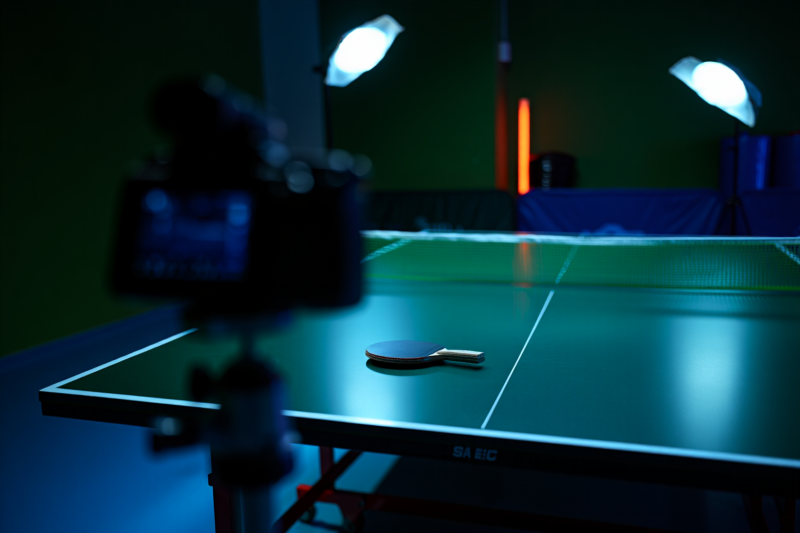
In the high-paced world of modern table tennis, rapid and accurate diagnostics are crucial for technical development, tactical planning, and overall performance improvement. Whether you’re analyzing stroke mechanics, spin generation, or footwork, the environment in which you perform these assessments plays a vital role. Small adjustments to tables, balls, and lighting can significantly speed up diagnostic accuracy, helping players and coaches identify flaws and opportunities more efficiently.
At NomadSpin TT, we understand that optimizing your environment isn’t a luxury—it’s a necessity for unlocking peak performance and staying ahead in competitive play.
Why Adjusting Equipment and Lighting Matters
Improper setup can lead to misinterpretation of data, slowed diagnostics, and ultimately, missed opportunities for improvement. Proper adaptation ensures:
- Clear visibility of ball trajectory and spin
- Precise measurement of stroke mechanics
- Enhanced consistency in testing conditions
- Faster identification of technical flaws and strengths
Key factors influencing diagnostic success include the table height and surface, ball quality and placement, and lighting conditions.
Effective Strategies for Adapting Tables for Faster Diagnostics
1. Ensuring Consistent Table Height and Surface Conditions
Why it matters: An uneven or unstable table can distort movement and stroke analysis.
Strategies:
- Adjust the table height so that the playing surface is approximately waist level, providing natural positioning for strokes.
- Use a level and sturdy surface to prevent wobbling during tests.
- Periodically check the surface’s levelness with a spirit level, especially if the table is portable or in different locations.
2. Optimizing Table Surface for Visibility and Reaction
Tips:
- Use high-contrast table colors (e.g., dark green or blue) against the ball’s color to enhance visibility.
- Maintain a clean, smooth surface free of scratches or debris that can affect ball bounce and spin.
Selecting and Adjusting Balls for Accurate Diagnostics
1. Choosing the Right Ball Type
Why it’s critical: Different ball materials and sizes influence spin, bounce, and speed, which affect diagnostic clarity.
Recommendations:
- Use regulation 40mm plastic balls for consistency.
- Choose balls that are high-quality and uniform to reduce variability.
- Light-colored balls (white or orange) improve visibility under various lighting conditions.
2. Ball Placement and Condition
Best practices:
- Use consistent ball placement during drills to ensure comparability.
- Regularly inspect balls for damage or irregularities and replace as needed.
- Clean balls periodically to remove dirt that can alter spin and trajectory.
Enhancing Lighting to Accelerate Diagnostic Insights
1. Proper Lighting Placement
Goals:
- Minimize shadows that obscure ball movement and spin.
- Reduce glare and reflections that distort visibility.
Implementation:
- Use multiple adjustable light sources positioned to illuminate the entire playing area evenly.
- Position lights above and slightly behind the player to cast minimal shadows.
2. Lighting Intensity and Color Temperature
Optimal settings:
- Use bright, neutral white light (around 5000K–6500K) for clarity.
- Avoid flickering or inconsistent lighting, which can cause visual fatigue.
3. Using Technology for Faster Diagnostics
- Incorporate LED lighting with flicker-free technology.
- Consider motion-activated lights for quick adjustments.
- Integrate high-speed cameras with optimized lighting for detailed stroke and ball trajectory analysis.
| Area | Adjustment Tips | Benefit |
| Table | Use level, sturdy, high-contrast surface | Clearer stroke and bounce analysis |
| Balls | Use regulation, high-quality, consistent balls | Consistent spin and bounce readings |
| Lighting | Implement even, white, flicker-free lighting | Improved visibility, faster diagnosis |
FAQs About Setting Up for Better Diagnostics
How do I quickly calibrate my setup for diagnostics?
Start by ensuring the table is level, then set up lighting to eliminate shadows, and select uniform balls. Performing routine checks every session promotes consistency.
Can lighting really impact diagnostic accuracy?
Absolutely. Proper lighting enhances visibility of ball spin, trajectory, and subtle hand movements, reducing errors and saving time.
What tools can I use to optimize my setup?
- Level and measuring tape for table adjustments
- Adjustable LED lights with dimming options
- High-quality, regulation table tennis balls
- Cameras for slow-motion playback and analysis
Final Thoughts: Elevate Your Diagnostics Today
By adopting these strategic adaptations—properly adjusting tables, selecting appropriate balls, and optimizing lighting—you can significantly accelerate the diagnostic process. This not only improves accuracy but also boosts confidence in your technical assessments, leading to more effective training and enhanced performance on the table.
Start implementing these tips today and experience faster, clearer insights that propel your game to the next level. At NomadSpin TT, we are dedicated to helping you master the art and science of modern table tennis.